The T-Shirt Math Nobody Showed You: Why Merch Isn't the Cash Cow Indie Creators Think It Is
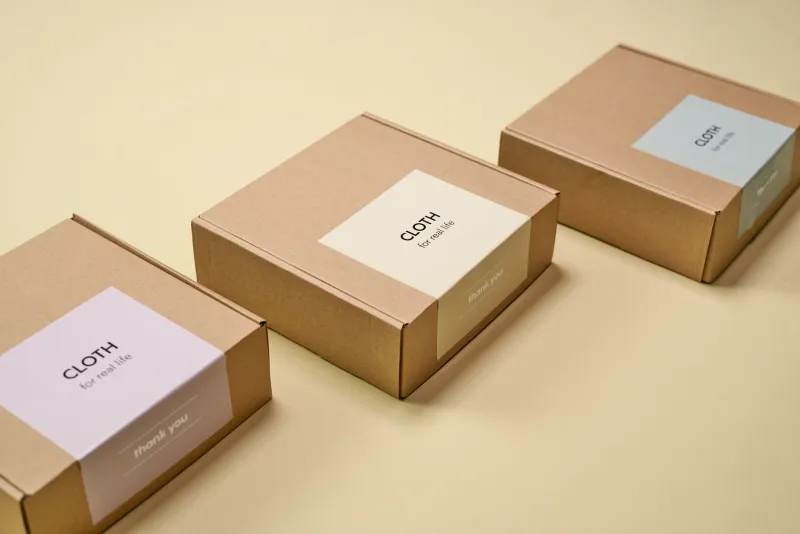
Let's be honest about where this idea came from. You watched a creator you respect talk about their merch drop. They showed the sold-out notification, posted a photo of stacked boxes, and called it a win. What they didn't show you was the spreadsheet.
The merch-as-passive-income narrative has become one of the most unchallenged myths in the indie creator space. And it's costing people real money.
This isn't an argument against merch. It's an argument against going into merch blind — which is exactly how most independent creators do it.
Let's Run the Actual Numbers
Here's a scenario that plays out constantly. An indie musician decides to do a t-shirt run. They order 50 shirts through a local print shop. The cost per unit, including blank shirt and printing, lands around $12. They sell the shirts for $30 each, which feels like a solid $18 margin.
Except it isn't.
If they're selling online, they're eating shipping costs — either passing them to the customer (which kills conversion) or absorbing them (which wipes the margin). A standard domestic shipment runs $5 to $8. Now the margin is $10 to $13. Then there's the packaging: poly mailers, tissue paper, stickers, thank-you cards if you're doing it right. Add another $1.50 to $2.50. The platform fee if you're running through Shopify, Big Cartel, or even Bandcamp takes another percentage. Payment processing takes a cut on top of that.
You started with an $18 margin. You're walking away with somewhere between $6 and $10 per shirt — before you account for the time spent designing, proofing, communicating with the printer, packing orders, and running to the post office.
And that's assuming you sell all 50. If you move 35 and the rest sit in a box in your closet, you've turned a creative project into a storage problem.
The Print-on-Demand Trap
Print-on-demand services like Printful, Printify, and Merch by Amazon seem like the obvious solution. No inventory risk, no upfront costs, automatic fulfillment. The pitch sounds great.
The math still doesn't.
A standard unisex t-shirt through most POD platforms runs $12 to $16 in production cost before you've made a dime. To price it competitively at $28 to $32, your margin is roughly $12 to $16 per sale. That sounds okay until you realize that without a significant existing audience, most indie creators are selling between 10 and 30 units per drop — if they're lucky.
Ten shirts at a $14 margin is $140. That's not passive income. That's a nice dinner.
POD works when you have volume. Volume requires audience. Audience requires time. Most creators are starting this process before the audience exists, which means they're doing a lot of work for very little financial return.
What Actually Happens to Your Brand When Merch Flops
Beyond the money, there's a subtler cost. When you launch merch that doesn't sell — or sells poorly — it creates a public record of low demand. Dead product pages, sparse order counts, and quiet launches can actually undercut the perception of momentum you're working hard to build.
In an underground creative scene where buzz matters, a merch drop that lands flat can feel more damaging than not dropping anything at all.
So What Actually Works?
Here's where the honest conversation gets more useful. There are revenue streams that consistently outperform merch for bootstrapped indie creators, and most of them don't require a storage unit or a shipping scale.
Digital products are the real passive income. A sample pack, a preset collection, a PDF zine, a tutorial download — these have zero fulfillment cost after creation and near-zero overhead. A producer selling a $20 sample pack who moves 200 units in a year has made $4,000 with no shipping, no inventory, and no boxes. That math actually works.
Limited physical drops with pre-orders solve the inventory problem entirely. Instead of guessing how many shirts to order, you open pre-orders for two weeks and only produce what's been paid for. Your margin is protected, your risk is zero, and the scarcity creates genuine demand. This is how smart indie brands operate.
Experiences over objects is a shift more creators should make. A virtual workshop, a one-on-one session, a listening party with Q&A, a paid Discord community — these generate revenue through connection rather than logistics. And connection is something indie creators are actually good at building.
Licensing your work is underused and often more lucrative than a merch run. Visual artists can license designs to brands, musicians can license instrumentals for sync or content use, and writers can license pieces for republication. The upfront effort is similar to creating merch; the ongoing return is usually better.
The Bottom Line
Merch isn't evil. A well-timed, well-priced drop for a creator with an engaged audience can absolutely work. But it's not the entry-level income stream the creator economy content machine makes it out to be.
Before you spend $600 on a shirt run, ask yourself: do I have 50 people who would pay $30 for this today? If the answer is yes, go for it. If the answer is "I hope so," put that money somewhere else first.
Build the audience. Build the demand. Then build the merch.
In that order.