No Label, No Problem: How Bedroom Producers Are Flipping the Script on the Music Industry
The Studio Is Wherever You Make It
Not too long ago, if you wanted your music to sound legit, you had to book time at a real studio. We're talking hundreds of dollars an hour, a producer who may or may not actually get your vision, and a label contract that basically signed your soul away in exchange for a shot at radio play. That whole system? It's cracking at the foundation.
Today, a kid in Columbus, Ohio with a $600 setup and a decent internet connection can put out a track that goes toe-to-toe with anything on a major label's roster. That's not hype — that's just where we are in 2024. The barriers didn't just lower. For a lot of creators, they basically disappeared.
We spent time talking to some of the indie scene's most resourceful producers to find out what's actually in their setups, what software is doing the heavy lifting, and how they built sustainable careers without ever stepping foot in a commercial studio.
The Gear That's Changing Everything
Let's start with the hardware, because this is where a lot of new creators get overwhelmed. The good news: you don't need to spend a fortune.
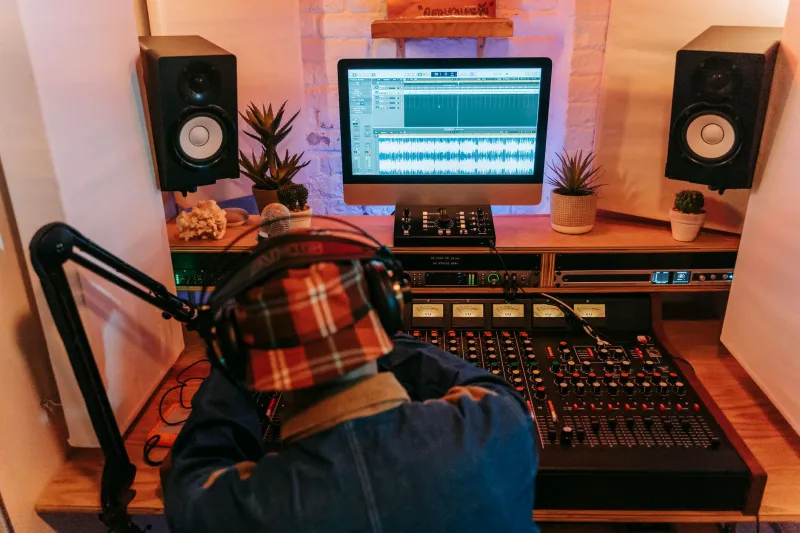
Audio Interface — This is the brain of your home setup. The Focusrite Scarlett Solo (around $120) is the go-to for beginners, and honestly, a lot of working producers never feel the need to upgrade. It converts your microphone signal into something your computer can use, and it does it cleanly.
Condenser Microphone — The Audio-Technica AT2020 sits around $99 and has been on more underground hits than most people realize. For vocals, acoustic instruments, and even room ambiance, it punches way above its price tag.
Studio Monitors or Headphones — Mixing on regular earbuds is a trap. The Yamaha HS5 monitors ($400/pair) are a popular step-up, but the Audio-Technica ATH-M50x headphones ($150) are a solid starting point if you're working in an apartment where cranking speakers isn't an option.
Acoustic Treatment — This is the one people skip and then wonder why their mixes sound weird. You don't need to foam out an entire room. Hanging moving blankets, placing bookshelves strategically, and recording in a closet full of clothes can make a dramatic difference in sound quality. Free and free-ninety-nine.
Software: The Real Power Tools
Your DAW — Digital Audio Workstation — is where the magic happens. Here's what the indie community is actually using:
- GarageBand (free on Mac) — Don't sleep on this one. Plenty of producers started here and some never left.
- FL Studio — A one-time purchase (starting around $99) with lifetime free updates. It's been the backbone of hip-hop and electronic production for decades.
- Ableton Live — The live performance and loop-based production standard. The Intro version runs about $99.
- Logic Pro — At $199.99 it's a steal for what you get. Widely considered one of the most complete DAWs on the market.
Beyond the DAW, free plugins from companies like Spitfire Audio (LABS), Valhalla (their FreqEcho and SpaceModulator), and Native Instruments (Komplete Start) give indie producers access to studio-quality sounds without opening their wallets.
Real Talk From Real Producers
We caught up with Marcus T., a producer out of Atlanta who's been releasing music independently for four years and now earns a full-time living from his craft. His entire setup cost him under $800 when he started.
"People think you need all this expensive gear to be taken seriously," he told us. "But your ear is the most important tool you have. I've heard $10,000 studio sessions that sound worse than stuff people are making in their bedrooms because the person behind the board actually cared about what they were making."
Marcus's current workflow: he tracks vocals in a walk-in closet lined with acoustic foam panels he got off Amazon for $40, mixes entirely in headphones, and masters using a combination of iZotope Ozone Elements and reference tracks from artists whose sound he respects.
Then there's Priya S., an indie pop artist based in Portland who produces, engineers, and masters all her own material. She's been featured on Spotify editorial playlists multiple times — all from her 10x10 bedroom studio.
"The learning curve is real," she admits. "I spent probably a year making stuff that sounded terrible before it clicked. But every dollar I didn't spend on a studio, I put back into marketing and building my audience. Now I own everything I've ever made."
That last part is worth underlining: ownership. When you produce your own music, you keep your masters. In an era where streaming royalties are measured in fractions of a cent, owning your catalog is the long game that actually pays off.
The Techniques That Separate Good From Great
Gear and software only get you so far. The producers who are really breaking through share a few common habits:
Reference Mixing — Always compare your mix to professionally released songs in a similar genre. If your low end sounds muddy next to your reference track, you've got work to do.
Take Breaks — Ear fatigue is real. Stepping away for 20 minutes and coming back with fresh ears catches things you'd miss otherwise.
Learn the Fundamentals — YouTube has more free mixing and production tutorials than you could watch in a lifetime. Channels like In The Mix, Produce Like A Pro, and Streaky are community favorites.
Collaboration — Even solo producers benefit from having a trusted set of ears. The indie community is full of people willing to trade feedback. Find your people.
The Bigger Picture
What's happening in bedrooms and basements across America right now isn't just a trend — it's a genuine restructuring of who gets to make music and who gets to profit from it. Major labels still have marketing budgets and industry relationships that independent artists can't easily replicate. But the sonic gap? That's closing fast.
The creators winning in this environment aren't necessarily the ones with the most expensive gear. They're the ones who stayed consistent, kept learning, and refused to wait for someone else's permission to put their art into the world.
That's what this whole thing is about. Built by creators. Powered by the underground. The bedroom studio is just where it starts.