Borrow the Amp, Keep the Money: Inside the Gear-Sharing Co-ops Quietly Rewriting Indie Budgets
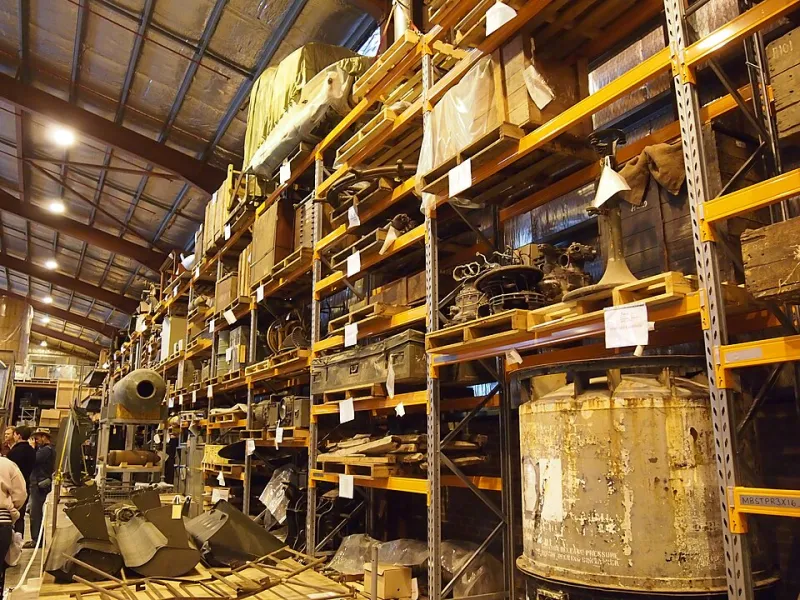
Photo: Nick-D, CC BY-SA 3.0, via Wikimedia Commons
There's a version of this story you already know. You save for eleven months, drop $1,400 on a tube amp, use it on three sessions, and then it lives under a tarp in your closet until you sell it for $600 to a guy on Marketplace who lowballs you in the parking lot.
Now there's a better version. In a growing number of mid-size US cities, the gear you need for one shoot, one record, one run of shows doesn't have to be yours. It just has to be nearby. Welcome to the gear library — the least glamorous, most useful piece of infrastructure in the indie scene right now.
The shelf in the back room
Most of these operations don't look like much. A co-op in a converted garage. A back room at a music shop that's been there since the '80s. A church basement with rolling shelving and a clipboard. A filmmaker's storage unit with a barcode scanner and a spreadsheet that would make a logistics manager cry.
What they share is a simple idea: a community's gear needs are collective, so the gear might as well be too. You don't need to own a 50mm prime, a wireless lav kit, four par cans, and a vintage Ludwig kit. You need access to them for a weekend in March, and then you need your hallway back.
In practice, inventory tends to cluster around what's expensive and boring to own. PA systems. Lighting kits. Telephoto glass. Sewing machines and dress forms. Fog machines, mic stands, DI boxes, tripods, and the specific cable that costs $80 and only exists in someone else's bin.
Three ways the money works
The models are all over the place, and that's fine, because they solve different problems.
Sliding-scale membership. Members pay somewhere in the $15–$40 a month range, scaled to income, and check out items at no extra cost for a set window. This works when a core group of regulars can carry the rent.
Per-item rental with a membership floor. A small monthly fee keeps you in the club; then you pay $10 a day for a mic case or $40 for a weekend with the PA. It sounds like a rental shop, but the rates are set to cover maintenance, not to turn a profit.
Work-trade. Hours instead of dollars. Sort cables, catalog new donations, staff a Saturday shift, fix the thing somebody returned broken. This is the lifeblood of co-ops in smaller scenes, and it's how a 19-year-old with no cash flow still gets access to a drum kit.
Almost every one of these places also sells a day pass. If you're just passing through town or you need one thing once, ask. Most of them will say yes for $20 and a signature.
The breakage conversation nobody wants to have
The number one question a new gear library gets is, understandably: what happens when I drop the lens?
The answer is usually some combination of three things. First, a damage fund — a small slice of every membership goes into a pot that absorbs normal wear and the occasional oops. Second, a written policy that a member is responsible for replacement value on negligence, and that the collective is responsible for age-related failure. Third, and most importantly, a culture where people report damage immediately instead of hiding it.
Some co-ops add a rider to a collective policy. Some lean on a local nonprofit to hold the coverage. Some just keep a running total of what's replaceable under $200 and accept that anything fancier is a group risk. None of it is airtight. All of it works better than the alternative, which is nobody having access to anything.
Etiquette is the whole product
Here's the part that separates a gear library from a pile of donations in a closet: the rules are social as much as they are written.
- Photograph what you took, in the case, before you leave. It ends every argument.
- Return it cleaner than you got it. XLR cables coiled over-under. Lens caps on. Batteries out of pedals.
- Ask 48 hours ahead for anything big. The PA is booked three weekends out and everyone knows it.
- Label your donation. If you're dropping off your old interface, write what's wrong with it on a piece of tape. Mysteries cost the volunteer coordinator an hour.
- Don't sub-lend. The insurance, if there is any, covers members. Your buddy borrowing your borrowed amp is how a co-op dies.
- Say what you made. A photo of the shoot, a link to the record, a poster from the show. It sounds small. It's why people keep donating.
That last one is more load-bearing than it looks. Gear libraries are stocked by people who outgrew something and want it used instead of stored. When the shelves visibly produce work — a finished EP, a short film, a tour — the donations keep coming. When it looks like a warehouse where things go to die, they don't.
Starting one in your town
You don't need a building. You need a spreadsheet, a shelf, three people who'll vouch for each other, and a written policy that fits on one page. Start with what you already have between you, then post in the local scene groups asking what people wish they could borrow. The answer is usually consistent: lighting, PA, and a good vocal mic.
Keep it small on purpose. Fifty members who trust each other beat four hundred who don't. And keep the barrier low — one free Saturday a month for anyone in the community, no card required, is how you find the next person who'll run the whole thing in three years.
The gear industry would prefer you buy. The scene would prefer you make the thing. Those are different incentives, and only one of them gets your record finished this winter.